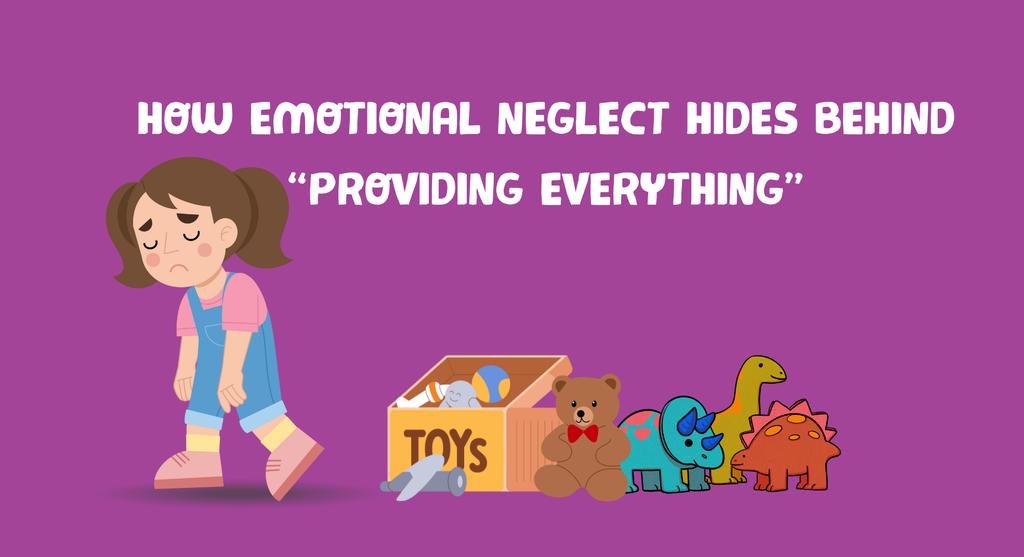
You buy the toys. You sign them up for every class. You make sure they never feel like they’re missing out. Yet somehow, at the end of the day, something still feels… off. If you’ve ever wondered why “doing everything right” still doesn’t feel like enough, you’re not alone, and the answer may have less to do with what you give and more to do with how emotionally present you are.
What “Providing Everything” Really Means
“Providing everything” often means meeting children’s material needs school supplies, extracurricular activities, or even the latest toys, which is common within Egyptian families balancing busy schedules. While these things are important, children crave deep emotional attention: being noticed, actively heard, and appreciated. When parents only hyperfixate on material provision, they may unintentionally overlook these fundamental emotional needs.
Why Parents Fall Into This Pattern
Parents often rely on “providing everything” because of:
· Guilt: Feeling they are making up for time spent away from their kids.
· Fear of falling short: Wanting to be the “perfect parent” through gifts and opportunities.
· Lack of time or energy: Busy schedules make emotional connections feel secondary.
· Cultural or societal pressures: Belief that providing materially is equivalent to love.
Even with the best intentions, these factors can lead to emotional neglect without parents realizing it.
Signs of Emotional Neglect
At times, in the whirlwind of juggling between school runs and work deadlines, it’s possible to overlook the little chances to communicate with your children. Like when your child is full of energy and beaming to show you something they did, and you only half-listen while thinking about what you will be doing for the rest of the day. These minor occurrences can be bottled up, and by the time your child’s need for genuine emotional connection may go unnoticed, even if their other materialistic needs are being fulfilled. Children sense this distance, even if nothing is explicitly said. Over time, these can make them feel unseen.
Long-Term Impact on Children
Without a consistent emotional connection, children may gradually learn to silence their feelings, believing their emotions are unimportant or too much to share. This often shows up as low self-esteem, chronic self-doubt, or a constant need for external validation. Some children may act out negatively, not out of misbehavior, but as a way to get attention, just to be acknowledged. Others may become overly independent, avoiding emotional closeness altogether. Over time, these patterns can carry into adulthood, making it difficult to trust others, communicate needs, or form secure, emotionally safe relationships.
What to Do Instead: Practical Steps for Emotional Availability
Being emotionally available doesn’t require grand gestures just consistent, small actions:
· Pause to truly listen: Put away distractions and give your child your full attention.
· Ask open-ended questions: Encourage them to share thoughts and feelings.
· Celebrate small wins: Acknowledge efforts, not just results.
· Carve micro-moments of connection: Even five focused minutes a day matter.
· Show physical warmth: Hugs, smiles, and gentle touch reinforce emotional security.
Consistency is key. Even short, daily interactions can build lasting emotional bonds.
And remember, every little effort counts. Even a daily bedtime chat or a few minutes of focused play can make your child feel truly connected and secure. Start small, stay consistent, and watch those tiny moments turn into lasting bonds.
 Skip to content