 Skip to content

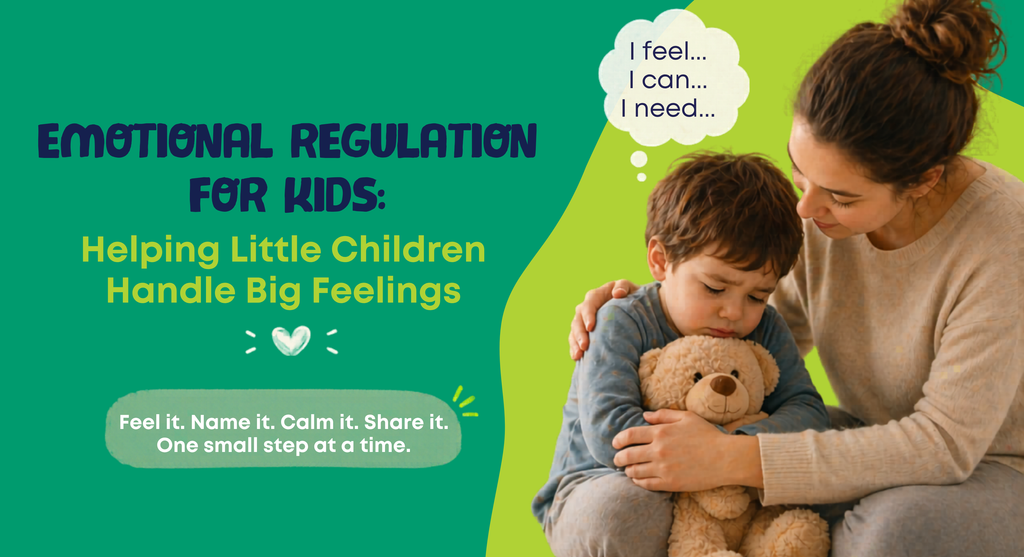

Emotional Regulation for Kids: Helping Little Children Handle Big Feelings
Emotional Regulation for Kids: Helping Little Children Handle Big Feelings
Emotional regulation for kids is not about stopping children from feeling upset, frustrated, or overwhelmed. It is about helping them understand what they feel, express it in a safe way, and gradually learn how to calm down.
For toddlers and young children, big feelings can show up quickly. A small disappointment can turn into tears, anger, shouting, or complete overwhelm. That is normal. Young children are still developing the part of their brain that allows them to handle emotions, and they need support before they can manage those feelings independently.
What is emotional regulation?
Emotional regulation is the ability to recognize feelings, respond to them, and recover from them in a healthy way. In early childhood, this skill is still developing, which is why children often need adults to guide them through emotional moments.
Emotional development in children happens over time. It grows through repetition, modeling, and safe support, not through punishment or pressure.
Why toddlers struggle with big feelings
Toddler emotions can feel intense because young children are still developing:
-
language to describe what they feel
-
impulse control
-
patience
-
flexible thinking
-
calming skills
That is why helping toddlers with big feelings starts with understanding that emotional outbursts are often signs of overwhelm, not bad behavior. They are not giving you a hard time; they are having a hard time.
One of the most important steps: teaching children to name feelings
A big part of emotional regulation for kids is helping children put words to their emotions. When a child can name a feeling, that feeling often becomes easier to understand and express.
Simple emotional vocabulary can make a big difference. Words like:
-
sad
-
angry
-
frustrated
-
scared
-
worried
-
excited
-
shy
-
calm
Can help children connect their inner experience to language.
Instead of only saying “stop crying” or “calm down,” it is often more helpful to say things like:
-
“You seem frustrated.”
-
“I think you’re feeling sad.”
-
“That made you angry.”
-
“You look disappointed.”
This teaches children that feelings are real, manageable, and something they can talk about. Not something to suppress.
Why expressing feelings matters
Teaching children to express emotions safely is just as important as teaching them to name them. Children need to learn that all feelings are allowed, even when not all behaviors are.
You can help by teaching them to say things like:
-
“I’m mad.”
-
“I need help.”
-
“I feel sad.”
-
“I want a turn.”
-
“I need space.”
This builds emotional confidence and gives children alternatives to hitting, screaming, or shutting down.
Calming strategies for kids
Children also need simple ways to calm their bodies once big feelings appear. The best calming strategies for kids are easy, repeatable, and age-appropriate.
Try:
-
taking slow breaths together
-
offering a hug or physical reassurance if they allow it
-
moving to a quiet corner
-
naming the feeling out loud
-
using reassuring phrases like “You’re safe” or “I’m here”
-
reading a calming story
-
giving them time before talking too much
Children usually cannot learn in the middle of full overwhelm. First they need help feeling safe and settled. Calm first, correct later.
What parents and caregivers can do
Children learn emotional regulation from the adults around them. That means your response matters just as much as the lesson itself.
Helpful approaches include:
-
staying calm when possible
-
validating the feeling, even if you correct the behavior
-
keeping language simple
-
repeating emotional words often
-
practicing emotional naming outside difficult moments
-
using books, flashcards, and everyday conversations to build understanding
The goal is not to make children “get over it” quickly. The goal is to help them get through them more confidently over time.
A helpful way to teach feelings: flashcards
One simple and effective way to support emotional regulation for kids is through flashcards. Emotion flashcards can help children connect facial expressions, words, and real-life feelings in a visual way.
Flashcards are especially useful because they turn emotional learning into something gentle and interactive. You can use them to:
-
name different feelings
-
talk about what each expression means
-
ask children when they have felt that way
-
practice matching emotions to situations
-
build emotional vocabulary through repetition
For young children, visual tools often work better than abstract explanations. That is why flashcards can be such a useful support for toddler emotions and emotional development in children.
Explore Lanalou’s flashcards to help your children build vocabulary, recognition, and early communication skills through playful interaction.
Supporting big feelings in little children
Emotional regulation is not a skill children learn in one conversation. It takes many small moments of support, repetition, and modeling.
A child who learns to say “I’m sad” instead of melting down immediately is making progress. A child who begins to recognize anger, ask for help, or use a calming strategy is building an important life skill.
When children are taught to name their feelings, express them safely, and use simple calming tools, emotional regulation becomes something they can build step by step. And when that learning is supported through visual, playful tools like flashcards, it often becomes easier for little children to understand what is happening inside them and how to talk about it.